Radiation Security
Is radon really bad for you?
Breathing radon over time increases your risk of lung cancer. Radon is the second leading cause of lung cancer in the United States. Nationally, the EPA estimates that about 21,000 people die each year from radon-related lung cancer. Only smoking causes more lung cancer deaths.
You'll encounter extremely low raised risk of establishing lung cancer cells due to radon if you can keep your interior radon http://www.4mark.net/story/2329475/visit-homepage levels at 2 pCi/L or reduced. Only 2 non-smokers out of 1,000 will certainly develop lung cancer cells particularly due to the exposure when you get to the 1.3 pCi/L degree that is normal for indoor air.
Just regarding 20% of all colleges nationwide have done screening, although the EPA advises that every school be tested. These numbers are perhaps low sufficient to make sure defense of most of kids from raised radon direct exposures. For direct exposure requirements to be efficient, they need to be established for those most susceptible. The primary path of direct exposure to radon and also its children is breathing.
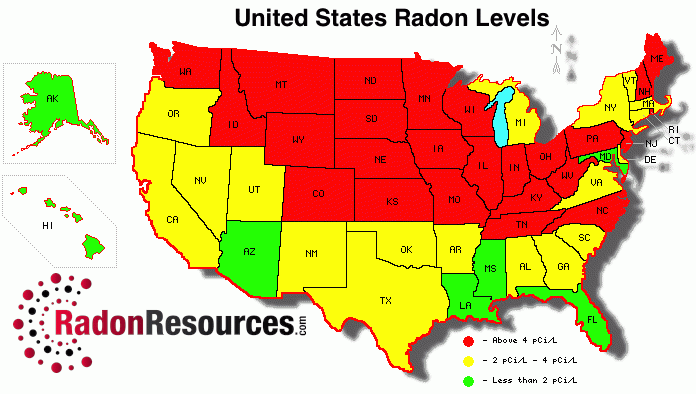
Is radon mitigation really necessary?
When radon gas enters the body, it exposes the lungs to small amounts of radiation. In small quantities, experts say this is harmless. However, in persistent exposures or larger quantities, radon can damage the cells of the lining of the lungs, increasing a person's chance of developing lung cancer.
It can additionally be launched from building products or with water stemming from radon-contaminated wells, according to the National Institutes of Wellness (NIH). Radon levels can be greater in homes and also buildings that are well-insulated, securely sealed or built on dirt rich in the radioactive components uranium, radium and also thorium.
- Lung cancer cells threat rises 16% per 2.7 pCi/L increase in radon exposure.
- Radon gas is a naturally-occurring byproduct of the contaminated degeneration of Uranium in the dirt.
- Depending on your geographic place, the radon levels of the air you take a breath beyond your home might be as high as 0.75 pCi/L.
- The US EPA has placed it simply, stating, "Any radon exposure has some threat of triggering lung cancer cells.
How do you eliminate radon?

Possible symptoms include shortness of breath (difficulty breathing), a new or worsening cough, pain or tightness in the chest, hoarseness, or trouble swallowing. If you smoke and you know you've been exposed to high levels of radon, it's very important to quit smoking.
As an example, an individual living in a home with a radon level of 4.0 pCi/L or lower has an around 7 in 1000 chance of getting ill. On the various other hand, a person living in a residence with a radon degree of 20 pCi/L or greater has a 36 in 1000 chance of having lung cancer. The World Health And Wellness Company (THAT) established an action degree of 2.7 pCi/L based upon a three-year around the world study by more than 30 popular scientists.
Just how dangerous is radon gas?
What are the symptoms of radon in your home?
If a person has been exposed to radon, 75 percent of the radon progeny in lungs will become Learn here "harmless" lead particles after 44 years. When an alpha particle damages a cell to make it cancerous, the onset of lung cancer takes a minimum of 5 years but most often 15 to 25 years, and even longer.
Thinking you stay in an area not affected by radon is simply one of the misconceptions about this dangerous gas. We evaluated all material related to radon on state federal government Web sites using a standardized data collection form.
How long does it take for radon to cause cancer?
Fact: You will reduce your risk of lung cancer when you reduce radon levels, even if you've lived with an elevated radon level for a long time. Keep in mind that radon levels below 4 pCi/L still pose some risk and that radon levels can be reduced to 2 pCi/L or below in most homes.